
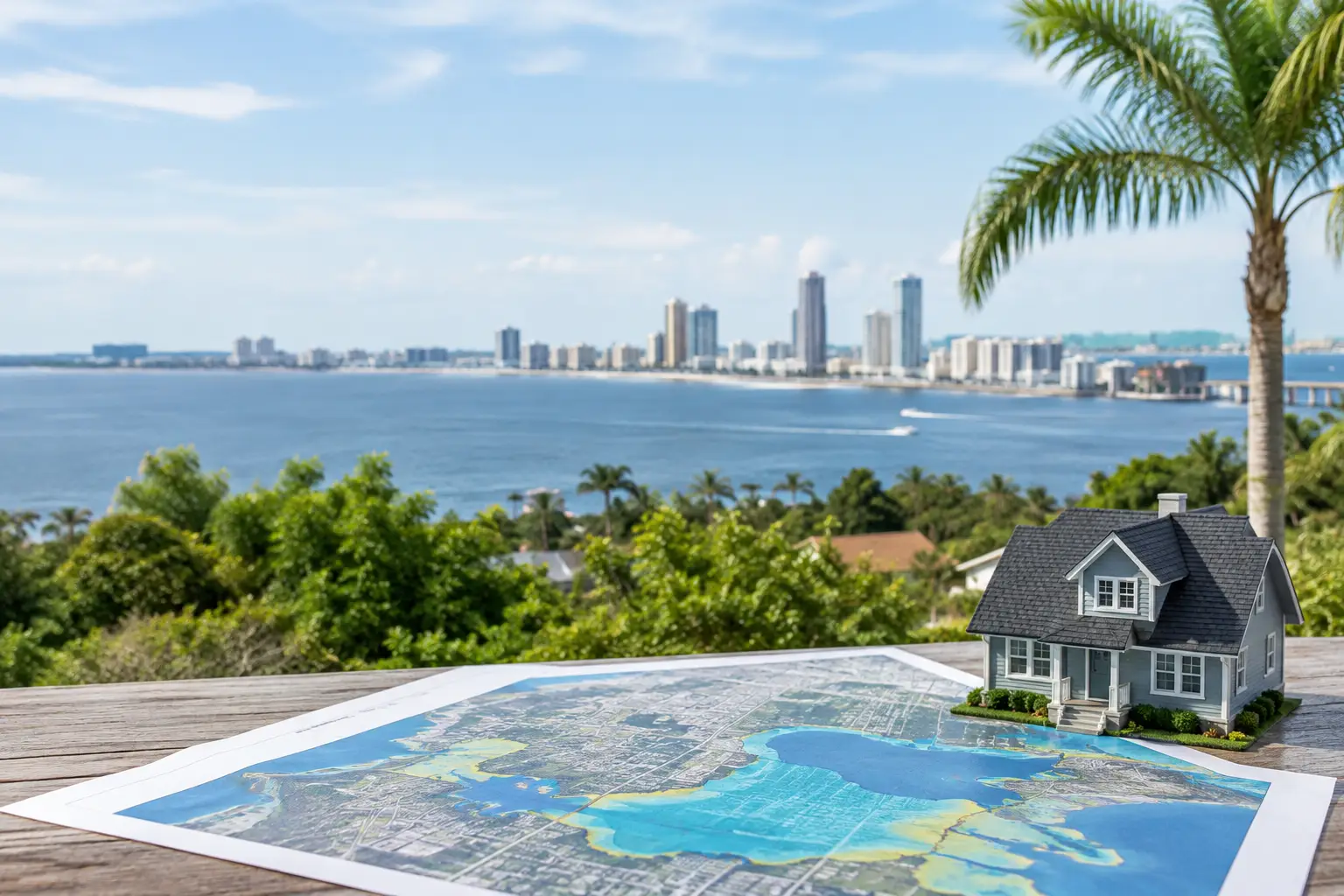
Flood Zone Comparison for Panama City Buyers
A waterfront view, a short drive to the beach, or a home near a bayou can be a great fit for your lifestyle. But in Northwest Florida, a flood zone comparison needs to be part of the decision before you fall in love with the floor plan. Flood zones can affect financing, insurance premiums, future resale conversations, and the amount of risk you are personally comfortable carrying.
The key is to look beyond a listing label. A property in a lower-risk zone is not automatically flood-proof, and a property in a high-risk zone is not automatically a poor purchase. The right choice depends on the specific home, its elevation, its insurance options, and how the property fits your budget and plans.
Flood Zone Comparison: What the Letters Actually Mean
Flood zones are shown on Flood Insurance Rate Maps prepared for the National Flood Insurance Program. They are based on modeled flood risk, terrain, drainage patterns, coastal exposure, and historical information. They are useful planning tools, but they are not a guarantee of what will or will not happen during a storm.
For many buyers around Panama City, Panama City Beach, Callaway, and coastal Bay County, the most common comparison involves Zone X, Zone AE, and Zone VE.
Zone X: Lower mapped risk, not no risk
Zone X generally indicates a lower level of mapped flood risk than the Special Flood Hazard Area. On many listings, you may see a distinction between shaded and unshaded Zone X. The shading can indicate a moderate-risk area, while unshaded X commonly reflects an area with lower mapped risk.
If you are financing a home in Zone X, your lender will usually not require flood insurance. That can make the monthly ownership cost more predictable. Still, flood damage can occur outside high-risk flood zones due to heavy rainfall, drainage failures, storm surge beyond mapped expectations, or changing local conditions.
A buyer should not treat Zone X as a reason to skip investigation. Ask whether the home has ever taken on water, how the lot drains after severe rain, and whether a prior owner carried flood insurance voluntarily. A voluntary policy can be a practical safeguard, particularly when the home is near water or in an area with a history of localized flooding.
Zone AE: Higher risk with a stated base flood elevation
Zone AE is a high-risk flood zone and is part of the Special Flood Hazard Area. If a buyer uses a federally regulated mortgage lender, flood insurance is generally required for a structure in Zone AE.
The major detail in AE is the Base Flood Elevation, often called BFE. This is the elevation that floodwaters are expected to reach during a base flood event as modeled on the map. The most useful question is not simply, “Is this home in AE?” It is, “How does the lowest floor of this particular home compare with the BFE?”
A properly completed elevation certificate may help answer that question. A home elevated well above the BFE can have a very different insurance profile from a similar home built lower on the same street. Foundation type, enclosure areas below the elevated floor, mechanical equipment placement, and any updates made after storm damage may also matter.
Zone VE: Coastal wave hazard and more exposure
Zone VE is also a high-risk zone, but it signals a coastal area subject to wave action during a base flood event. This is common in exposed waterfront and beachside settings. The risk is not limited to standing water. Waves can create forceful impacts, scour soil around foundations, and damage structures in ways that inland flooding may not.
Homes in VE zones can be excellent properties, but buyers should expect a more detailed due-diligence process. Insurance may cost more, construction requirements can be stricter, and buyers should pay close attention to pilings, foundation condition, breakaway walls, stairs, decks, and the elevation of utilities and HVAC equipment.
Why the Same Flood Zone Can Produce Different Costs
A flood zone is only one input in an insurance quote. Two nearby homes in Zone AE can have very different annual premiums because of their elevation, construction details, coverage amount, deductible, prior claims, and the insurer’s underwriting guidelines.
That is why estimating insurance from a neighbor’s policy or an online average can lead to a costly surprise. Request quotes for the actual address during your due-diligence period. Consider both National Flood Insurance Program coverage and private flood insurance where available. Neither is automatically the better choice in every situation. Coverage limits, waiting periods, lender acceptance, exclusions, deductibles, and renewal pricing all deserve review.
Do not assume that flood insurance covers every water-related loss. Policies may have limits for contents, temporary living costs, landscaping, pools, detached structures, and improvements below an elevated home. Read the policy terms rather than relying on the word “covered.”
What to Review Before You Write an Offer
When a home is near the coast, a bay, a creek, or a drainage corridor, flood research should start before or alongside your offer preparation. A good review looks at the property rather than relying solely on the flood zone shown in a listing.
Request the current flood map panel and confirm the zone for the structure itself. A large parcel can cross zone boundaries, so the location of the house matters more than the general neighborhood designation. If the property is in AE or VE, ask for an elevation certificate if one is available. It can be one of the most valuable documents in the file.
Also ask about prior flood claims, water intrusion, repairs after hurricanes, and permits for substantial improvements. Seller disclosures and the seller’s knowledge are valuable, but they should be paired with your own inspections and document review. Look at drainage swales, gutters, downspout discharge, grading, crawl spaces, garage levels, and signs of moisture or previous repairs.
For an elevated home, inspect the area below the living space carefully. Enclosed storage, finished rooms, electrical components, and mechanical systems below the expected flood level may affect both risk and insurance. A qualified home inspector and, when appropriate, a specialist familiar with coastal construction can help identify concerns that a standard walkthrough may miss.
Financing Changes the Conversation
For buyers using a VA loan, conventional loan, FHA loan, or other mortgage financing, the lender’s flood determination controls whether flood insurance is required. Even when a buyer believes the map designation is incorrect, the loan process can pause until the issue is resolved.
Military families making a PCS move often have compressed timelines, remote decision-making, and limited flexibility after arriving at Tyndall Air Force Base. That makes early insurance research especially valuable. It is far easier to compare premiums and documentation before the appraisal, underwriting, and closing dates are already in motion.
If flood insurance is required, factor the premium into the full monthly housing cost along with principal, interest, taxes, homeowners insurance, HOA dues, and any windstorm coverage. A home that fits the purchase-price budget can still stretch the monthly budget if those items were not estimated early.
Flood Risk and Resale Are Related, but Not Identical
Buyers sometimes assume a high-risk flood zone makes a home difficult to sell. That is too broad. Many desirable waterfront, beach, and coastal properties are located in AE or VE zones, and their views, access, construction quality, and lifestyle appeal create strong demand.
The resale question is really about transparency and preparation. Future buyers will ask the same questions you should ask now: Is flood insurance required? What does it cost? Has the home flooded? Is the structure elevated appropriately? Are there records of repairs and permits?
A well-maintained property with clear documentation, sensible mitigation measures, and an understandable insurance history can be easier to explain than a lower-risk property with unexplained water damage. Keep copies of elevation certificates, insurance declarations, major repair invoices, drainage improvements, and permits. Those records can support a smoother sale later.
Make the Decision With the Whole Property in View
Flood risk deserves respect, but it should not be viewed in isolation. A thoughtfully built coastal home that sits well above base flood elevation may suit one buyer better than an inland home with poor drainage. Another buyer may value the simplicity of a Zone X property and the potential for lower carrying costs. Both decisions can be reasonable.
Before committing, compare the map designation, elevation information, insurance quotes, inspection findings, financing requirements, and your comfort with risk. Bradley Barnes Real Estate can help buyers organize those questions around a specific property so the decision is based on usable local information, not a single letter on a map.
The best next step is simple: get the property-specific documents and insurance numbers early enough that you still have choices. A clear answer before the offer is often worth far more than a quick answer after closing.