
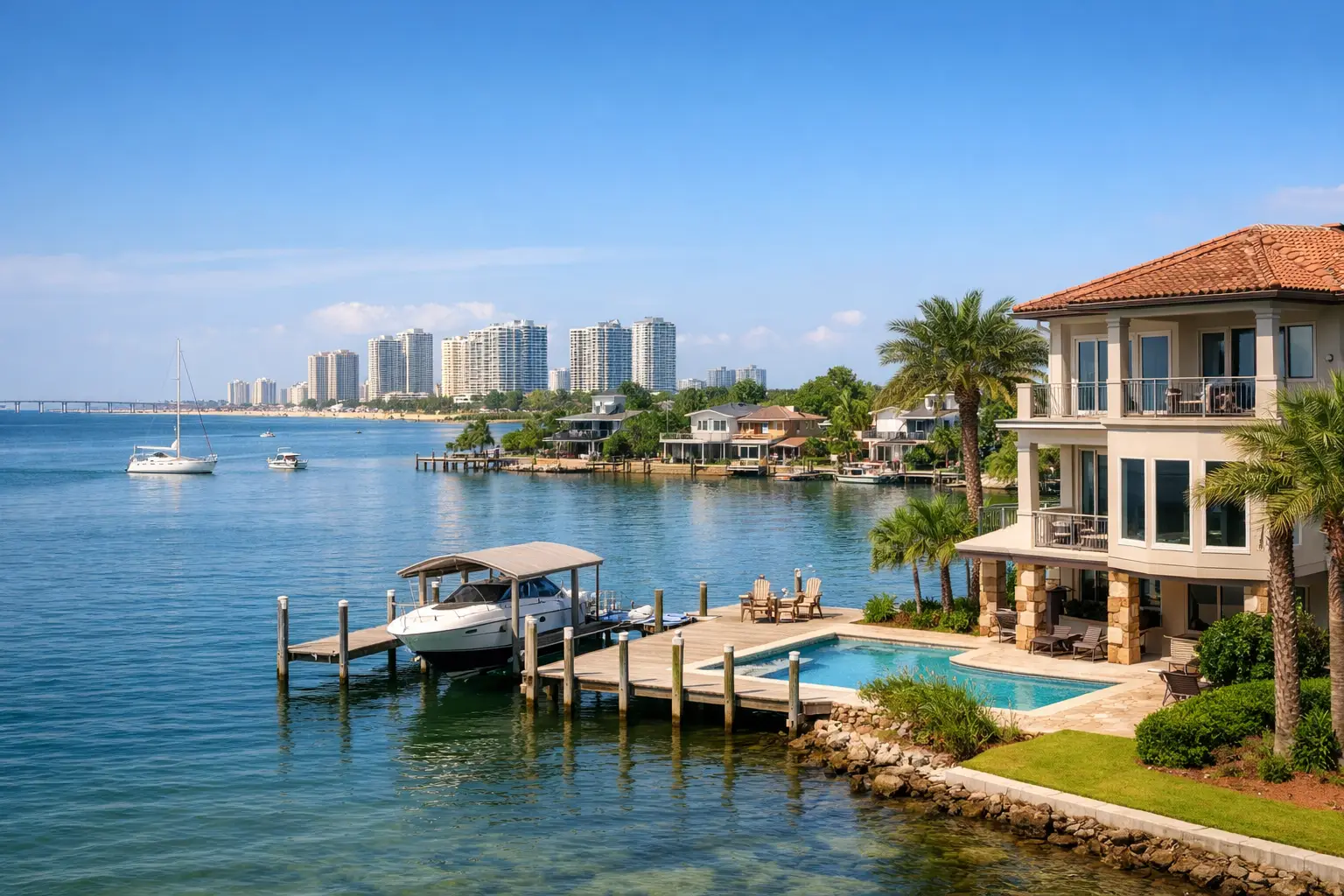
Waterfront Homes Panama City Florida Buyers Love
A sunrise over St. Andrews Bay can make a home tour memorable, but waterfront homes Panama City Florida buyers choose wisely are about much more than the view. The water behind or across from a property affects insurance, maintenance, financing, access, resale appeal, and how the home works for your everyday life. A beautiful setting should be the beginning of the conversation, not the only reason to write an offer.
For a family relocating to Bay County, especially on a military PCS timeline, waterfront can also mean very different things. A quiet bayou, a canal with boat access, a bay-front home, and a Gulf-view condo each offer a distinct lifestyle and ownership profile. The right fit depends on how you plan to use the property, how long you expect to keep it, and what costs feel comfortable after closing.
Waterfront Homes in Panama City, Florida: Know What You Are Buying
Listings may use terms such as waterfront, water view, water access, bay front, canal front, or deeded access. Those words are not interchangeable. Before falling in love with a location, ask what the property actually includes and what rights transfer with the sale.
A true waterfront lot generally extends to a defined boundary along the water, subject to public trust areas, easements, and local or state rules. A home with a water view may be across the street, behind another property, or near water without direct access. Water access can mean a community dock, neighborhood boat ramp, or shared path rather than a private shoreline.
The view itself deserves careful verification. Stand in the main living areas, primary bedroom, outdoor spaces, and yard. Consider the angle of neighboring homes, mature trees, future construction possibilities, and the tide. A listing photo taken from a raised position or with a wide-angle lens may not reflect the view from where you will actually spend time.
Bay, Bayou, Canal, and Gulf Settings
Bay-front homes can offer broad water views, breezes, and proximity to boating on St. Andrews Bay. Depending on the shoreline and exposure, they may also face more wind, wave action, and storm-related maintenance. Bayou properties often feel more sheltered and residential, with calmer water and an established neighborhood character. Their navigability can vary, so boat owners should confirm water depth, bridge clearance, and the route to open water.
Canal-front homes may appeal to buyers who want a dock or boat lift close to the back door. Yet not every canal accommodates every boat, and some have fixed bridges, narrow turns, or limited depths. Gulf-front and beach-area properties provide a different experience altogether, with stronger vacation demand in certain locations but potentially higher association costs, insurance considerations, and exposure to salt air.
There is no universally better waterfront type. Someone seeking a peaceful primary residence may prefer a protected bayou, while an avid angler may place navigable access above a panoramic view. Buyers looking for a second home or investment property should also weigh rental restrictions, local demand patterns, and the practical effort of managing a coastal property.
Look Beyond the Listing Price
Waterfront ownership has expenses that deserve a place in your pre-approval and offer strategy. The purchase price is only one part of the monthly and long-term commitment.
Flood insurance is a major item to review. A lender may require coverage based on the property’s flood zone and loan type, but a property outside a required zone can still carry flood risk. Ask for available flood insurance information, review flood-zone details, and discuss coverage options with an insurance professional early in the process. Do not assume a prior policy’s premium or coverage will automatically apply to a new owner.
Wind coverage, homeowners insurance, deductibles, and inspection requirements also matter along the coast. The age and condition of the roof, windows, exterior doors, seawall, dock, and electrical systems can influence both insurability and cost. Getting insurance quotes during the inspection period helps prevent a late surprise that changes the affordability picture.
Maintenance tends to be more persistent near the water. Salt air can accelerate corrosion on railings, fasteners, HVAC equipment, outdoor furniture, and boat lifts. Wood docks need regular attention, and bulkheads or seawalls can be expensive to repair or replace. A waterfront home can still be an excellent investment in your quality of life, but it should be budgeted like a waterfront home.
Inspections That Match the Property
A standard home inspection is essential, but waterfront features may need more specialized review. If the property has a dock, lift, seawall, retaining wall, or shoreline stabilization, consider whether an appropriate contractor should evaluate its condition and remaining useful life. Ask about permits, repairs, and improvements completed by the current owner.
For homes with septic systems, older plumbing, or private wells, additional inspections may be appropriate. A survey is especially valuable when property lines, access areas, docks, encroachments, or easements could affect your use of the site. Your real estate team can help organize the due diligence, but buyers should give themselves enough contract time to make decisions based on real information rather than assumptions.
Match the Location to Your Daily Routine
Waterfront living is often relaxing after work, but the commute and neighborhood setup still need to work Monday through Friday. Buyers relocating for Tyndall Air Force Base may want to compare travel times at the hours they expect to drive, not only on a quiet weekend showing. A few extra minutes on a map can feel very different during a busy PCS season or when family schedules are packed.
Also think about the everyday details: grocery access, schools, medical care, boat storage, hurricane preparation, and whether the road leading to the home feels comfortable during heavy rain. In some waterfront neighborhoods, the most scenic route may not be the most convenient one.
For condo buyers, the association deserves just as much attention as the water. Review association fees, reserves, rental rules, pending assessments, building maintenance, parking, pet policies, and any limits on balconies, grills, or personal watercraft. A lower purchase price can be less attractive if the building has substantial deferred maintenance or a special assessment on the horizon.
Financing and Offer Strategy for Waterfront Buyers
Waterfront properties can be financed with conventional, VA, FHA, or other loan options when the home and transaction meet program requirements. For eligible military buyers, a VA loan can be a valuable path to ownership, but it is still smart to understand appraisal requirements, property condition expectations, and how flood insurance affects the total payment.
A strong offer does not simply mean offering the highest number. It means structuring terms that support your goals while protecting your ability to inspect, secure financing, evaluate insurance, and review waterfront-specific documents. Sellers may value certainty, flexible timing, or a clean and well-supported offer, particularly when several buyers are interested.
Remote buyers can make informed decisions with detailed video tours, neighborhood drive-throughs, measurements, document review, and a clear list of priorities. Brad and Saya Barnes help clients separate the must-haves from the features that are nice to have, which is particularly useful when a PCS deadline leaves little room for repeated trips.
Selling a Waterfront Home Takes More Than a Water Photo
For sellers, the water is a major asset, but buyers will look for proof of condition and usability. Clear information about dock permits, boat-lift capacity, shoreline improvements, flood insurance history, recent repairs, and access to open water can build confidence. If there are limitations, such as shallow water at low tide or shared access, presenting them accurately is better than letting them become a surprise later.
Pricing also requires a close comparison of properties with similar water type, view quality, lot position, condition, and improvements. A canal-front home is not automatically comparable to a bay-front home, even if they are only minutes apart. Thoughtful preparation, strong property presentation, and a pricing strategy grounded in the local market give waterfront sellers a better chance to attract serious, qualified buyers.
The best waterfront home is the one whose view, access, upkeep, and location all fit the life you want to lead. Take the time to test those details before you commit, and the water can remain a source of enjoyment long after the closing paperwork is finished.