What Shapes Your Panama City Home Value?
A Panama City home value can change sharply from one neighborhood to the next, even when two homes have similar square footage and bedroom counts. A home near water, a newer build with lower anticipated insurance costs, or a property positioned for an easy Tyndall Air Force Base commute may attract a different buyer pool than a comparable home a few miles away. That is why a useful value estimate starts with local context, not a national calculator.
For owners considering a sale, value is more than a number to watch. It shapes your pricing strategy, your likely net proceeds, the repairs worth making, and the timeline you can reasonably expect. For buyers and military families preparing for a PCS move, understanding what supports value can also help you make a more confident offer and choose a home that fits both your daily life and longer-term plans.
What a Panama City Home Value Really Means
A home’s market value is the price a qualified buyer is likely to pay in the current market, given adequate exposure and reasonable time to act. It is not necessarily the same as the county’s assessed value for taxes, the amount you paid years ago, or a number generated by an automated valuation tool.
Online estimates can be a reasonable starting point, particularly for a straightforward home in a subdivision with frequent recent sales. But they cannot walk through your house, assess the condition of the roof, see an upgraded kitchen, account for a marsh view, or recognize that a nearby comparable was distressed or needed major work. They may also struggle with waterfront homes, condos, rural parcels, and neighborhoods where homes vary widely.
A comparative market analysis, or CMA, is more useful for a pricing decision because it compares your home with recent closed sales, current competition, and pending transactions. Closed sales show what buyers have actually paid. Active listings show what sellers are asking. Pending homes can offer clues about where buyers are responding right now, although the final sale price is not yet public.
Location Still Carries the Most Weight
“Location” is broad, and in Bay County it means more than a ZIP code. Buyers often weigh commute time, neighborhood character, access to schools and services, lot size, traffic patterns, and proximity to recreation. A property in Lynn Haven may appeal for different reasons than one in Callaway, Parker, or central Panama City. None is automatically better. Each serves a different set of priorities.
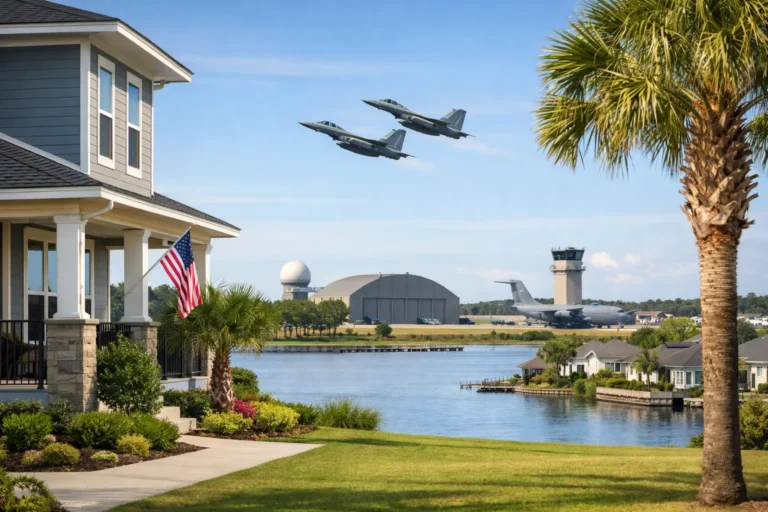
For some households, being near Tyndall Air Force Base is a meaningful advantage. Active-duty members, civilian employees, and contractors may place a premium on a manageable commute and a practical route during busy periods. That does not mean every home near the base has the same demand. Street-by-street condition, surrounding amenities, flood considerations, and the home’s price range still matter.
Water access and views can also have a substantial effect, but they require careful comparison. A direct waterfront home, a water-view home, and a home with nearby public access are different products. The premium buyers will pay depends on the view, access, dock or seawall condition, elevation, insurance profile, and whether the lifestyle benefit is easy to enjoy year-round.
Condition, Age, and Major Systems Influence Buyer Confidence
Buyers do not simply compare floor plans. They compare the amount of work they expect to take on after closing. A clean, well-maintained home often earns stronger attention because it feels less risky, especially for a buyer relocating on a compressed schedule.
In Northwest Florida, the age and condition of major systems are particularly important. Roof age, wind mitigation features, windows, HVAC condition, electrical panels, plumbing, and water heaters can affect not only inspection negotiations but also insurance availability and cost. A house with a newer roof and documented improvements may stand apart from a similar home whose maintenance history is unclear.
That does not mean every seller should renovate before listing. Large projects do not always return their full cost, and highly personal upgrades can narrow appeal. Often, practical work delivers the better result: addressing deferred maintenance, repairing obvious defects, improving lighting, refreshing paint where needed, and making the home easy to inspect. The right plan depends on the home’s condition, price range, and nearby competition.
Documentation Has Value Too
Keep records for permits, roof replacements, HVAC service, storm protection upgrades, surveys, warranties, and repairs. Buyers and their agents may ask for this information quickly. Clear documentation gives them fewer reasons to assume the worst and helps support the story behind your asking price.
Insurance and Flood Factors Matter in the Panhandle
Insurance is part of the affordability conversation for many buyers, not an afterthought. A buyer may like a home but reconsider if estimated homeowners, wind, or flood insurance changes the monthly payment beyond their comfort level. This is especially relevant for homes near the coast, in designated flood zones, or with older major systems.
A home’s flood zone does not, by itself, tell the complete story. Buyers should review the current flood map, elevation information when available, prior flood history, and insurance quotes for the specific property. Sellers benefit from gathering accurate details early rather than making broad assumptions about what coverage will cost.
The trade-off is straightforward: coastal proximity, water views, and beach access can create powerful demand, but they may also come with higher carrying costs and more detailed due diligence. A strong pricing strategy recognizes both sides. Ignoring insurance questions can cause a buyer to hesitate late in the process, while addressing them clearly can make the decision feel more manageable.
Timing and Competition Set the Price Range
The market does not assign a permanent value to a home. Inventory levels, interest rates, buyer activity, and seasonality all influence what buyers are willing and able to pay. When there are few well-priced homes available, sellers may have more leverage. When choices expand, condition, presentation, and price discipline become more important.
Pricing slightly above the market in hopes of leaving room to negotiate can work in limited circumstances, but it can also reduce early interest. The first days a listing is active often bring the most attention from buyers who have been waiting for a suitable home. If the price does not match the home’s condition and competing options, the listing can sit long enough for buyers to wonder what has been missed.
A price reduction is not automatically a failure. Sometimes new competition arrives, a feature has been overlooked, or the first price did not reflect buyer feedback. The goal is not to chase the market downward. It is to evaluate the evidence quickly and make a purposeful adjustment when needed.
How Sellers Can Prepare for a More Accurate Value Review
Before requesting a value estimate, gather the facts that make your property distinct. Note your home’s square footage, bedroom and bathroom count, lot size, year built, homeowners association details, and recent improvements. If you have a survey, elevation certificate, or insurance and wind-mitigation information, have those available as well.
Then consider the home through a buyer’s eyes. Are there repairs that will become immediate questions during a showing or inspection? Does the exterior make a strong first impression? Are rooms easy to understand and photograph? Small improvements can matter because they affect how buyers feel when they compare your home with other options.
A local valuation conversation should also include your goals. Are you trying to sell before a PCS report date? Do you need time to purchase another home? Is maximizing proceeds more important than moving quickly, or do you need certainty on a defined schedule? The recommended list price and preparation plan may look different depending on those answers.
A Note for Buyers Evaluating Value
Buyers should be cautious about treating an appraisal as the only measure of a home’s worth. An appraisal supports the lender’s collateral decision using accepted market data. Your decision also involves whether the home meets your needs, what alternatives exist, and what you can comfortably afford after taxes, insurance, and maintenance.
For military buyers using a VA loan, a thoughtful offer can balance a competitive price with appropriate inspections, financing terms, and timeline considerations. VA financing is a strong option for eligible buyers, but it does not remove the need to understand a property’s condition, insurance costs, or resale potential. Local guidance can help you separate genuine concerns from normal features of the Panhandle housing market.
A home value should give you a clear basis for action, not false precision. Whether you are preparing to sell, arriving for a PCS, or weighing a coastal purchase, Bradley Barnes Real Estate can help you evaluate the local sales, property details, and timing that matter to your decision. The most useful next step is a conversation built around your specific home and your actual plans.