New Construction Homes Bay County Buyers Should Check
A new home can feel like the simpler choice: clean finishes, current building codes, no prior owner’s repairs to untangle, and the chance to choose a floor plan that fits your household. But new construction homes Bay County buyers consider still require careful comparison. The builder, lot, contract, loan terms, neighborhood rules, and timeline can matter as much as the cabinets and flooring.
For a family arriving for a PCS move, a first-time buyer looking for predictable maintenance, or a local household ready for more space, the best decision starts with matching the type of new construction to the way you need to live. A beautiful model home is a useful starting point. It is not the full picture.
Start With the Right Type of New Construction Home
Not every new home purchase follows the same process. Some buyers choose a completed, move-in-ready home. Others buy a home that is under construction, while some select a lot and begin before the foundation is poured. Each option involves a different balance of speed, choice, and uncertainty.
A completed home can work well when timing is firm. You can walk through the actual property, assess natural light and neighboring homes, and plan around a more defined closing date. This is often helpful for buyers coordinating a move to Tyndall Air Force Base or starting a new job in the Panama City area.
A home already under construction may offer a shorter wait with a few remaining design choices. The trade-off is that certain decisions may already be set, including the lot, exterior color, structural options, and major finishes.
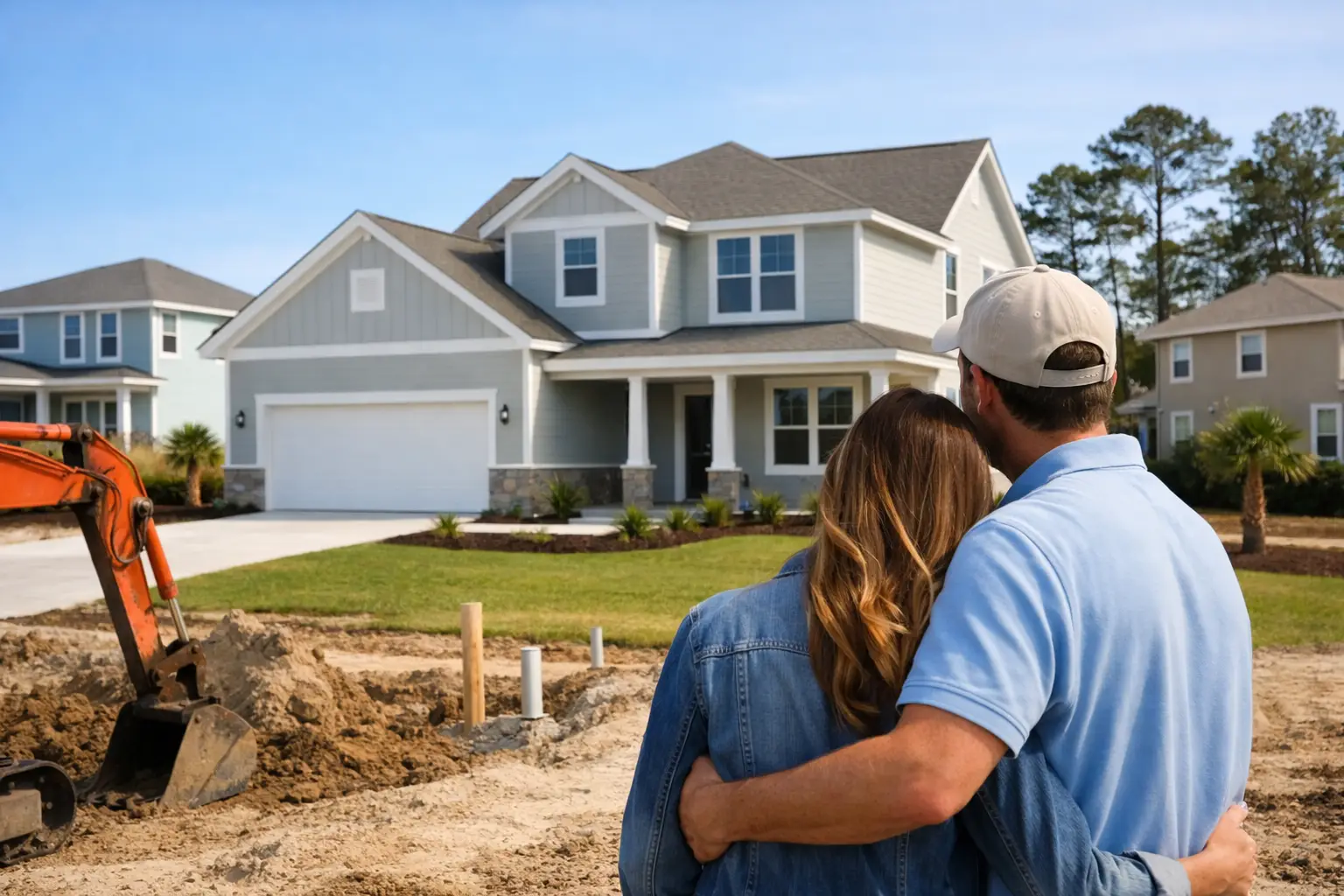
Building from the ground up provides the most personalization, but it also asks more of the buyer. Construction schedules can move, material availability can affect timing, and design selections often have firm deadlines. If you are buying remotely, clear communication and local representation become especially valuable.
Where New Construction Homes Bay County Buyers Find Value
Bay County offers different new-home settings, from established suburban areas near Lynn Haven and Callaway to communities with access to Panama City, Panama City Beach, and the eastern part of the county. The right location is not simply the one with the newest entrance sign or largest amenity center. It is the one that supports your routine after closing day.
Consider the drive to work at the times you will actually travel. A route that looks easy on a quiet afternoon may feel different during morning traffic, school pickup, or a busy beach weekend. Military households may also want to compare routes to Tyndall, including backup routes and the practical realities of a duty schedule.
Look beyond the model home lot, too. Ask what will be behind the home, beside it, and across the street once the community is fully built. A premium lot may be worth the added cost for privacy, water views, a preserve buffer, or less construction activity nearby. In other cases, a standard lot may make better financial sense if the home itself meets your needs.
Think About the Neighborhood as a Long-Term Purchase
New communities can change substantially over their first several years. Future phases, commercial development, road improvements, amenities, and homeowner association rules may all affect daily life and resale appeal. Ask for the planned build-out, not just the features available now.
HOA fees deserve a close look as well. Find out what they cover, how often they can change, whether there are rental restrictions, and what approval is needed for fences, sheds, exterior changes, or boats and trailers. Those details can be especially relevant in the Florida Panhandle, where many buyers value room for outdoor equipment and coastal recreation.
Compare Builders Beyond the Model Home
Model homes are designed to make an impression. They may include upgraded countertops, taller cabinets, premium flooring, extra lighting, custom wall treatments, and landscaping that are not included in the base price. That does not make them misleading, but it does mean buyers should ask direct questions before comparing one builder’s advertised price with another’s.
Request a written list of standard features and available upgrades for the specific floor plan and homesite. A lower initial price may become less competitive once you add the options you consider essential. Common cost differences can include lot premiums, appliance packages, window coverings, ceiling fans, gutters, screened patios, garage-door openers, and flooring upgrades.
Also ask how the builder handles price changes. With a completed home, the price is generally more straightforward. With a to-be-built home, the contract should clearly state what is included, how changes are priced, and whether certain costs can adjust before closing.
Builder incentives can be valuable, particularly when they apply to closing costs, rate buydowns, upgrades, or appliances. Still, an incentive tied to a preferred lender deserves comparison. The best offer is not always the one with the largest credit. Review the interest rate, loan fees, lender requirements, and total cash needed to close alongside the incentive.
Read the Contract Before You Fall in Love With the Finishes
Builder contracts are different from many resale contracts. They are often written to protect the builder’s process, deadlines, and remedies. Buyers should understand deposit terms, financing deadlines, completion estimates, cancellation provisions, and what happens if closing is delayed.
Pay particular attention to the estimated completion date. Construction timelines are estimates, not always guarantees. Weather, inspections, utility connections, permitting, and supply issues can affect the schedule. If you must be out of a current home by a specific date or are planning a PCS arrival, have a backup housing plan in mind.
The warranty also matters, but it should be understood rather than assumed. Many new homes include different coverage periods for workmanship, systems, and structural components. Ask what is covered, how warranty requests are submitted, who performs repairs, and what maintenance responsibilities remain with the homeowner.
An Independent Inspection Is Still Worth It
A new home should be inspected. Municipal inspections and builder quality checks are important, but they serve different purposes than an independent inspection arranged for the buyer.
Depending on the construction stage, buyers may benefit from a pre-drywall inspection and a final inspection before closing. An inspector can identify concerns involving framing, electrical work, plumbing, grading, roofing details, insulation, or unfinished items that are easier to address before you take possession.
Near closing, plan for a detailed final walk-through. Test appliances and fixtures, operate doors and windows, check the HVAC, and document cosmetic items that need attention. Keep copies of warranties, paint colors, manuals, and any punch-list agreement.
Financing a New Home Purchase
Financing should be discussed early, particularly when builder deposits and construction milestones are involved. VA financing can be an excellent option for eligible service members, veterans, and surviving spouses, but the home and loan still need to meet lender and appraisal requirements. Buyers using a VA loan should work with professionals who understand the program, not assume a new build automatically makes the process easier.
For every loan type, compare the full monthly payment. Property taxes, homeowners insurance, HOA fees, and flood insurance requirements can materially change affordability. In coastal and low-lying areas, ask about the property’s flood zone and insurance options early rather than waiting until the final week before closing.
Newer construction may offer advantages related to current wind-resistance standards and potentially favorable insurance characteristics, but premiums are property-specific. The home’s location, elevation, roof features, coverage choices, and insurer all matter. Get real estimates for the actual address when possible.
Make Choices That Protect Flexibility
Personalizing a new home is part of the appeal, yet some upgrades deliver more daily value than others. Prioritize structural options and features that are difficult or expensive to add later, such as an extra bedroom, covered patio, additional electrical outlets, upgraded insulation, a larger shower, or a practical garage layout.
Highly personal finishes can be enjoyable, but they may not return dollar-for-dollar at resale. That does not mean you should choose a home you do not like. It means balancing your taste with your expected ownership period and the norms of the neighborhood.
Before signing, compare at least a few homes, lots, and financing scenarios. The goal is not to turn an exciting purchase into a stressful spreadsheet exercise. It is to make sure the home that feels right also works when you account for commute, monthly cost, construction timing, insurance, and future plans.
A new home should give you a strong starting point, not a list of surprises after closing. If you are weighing communities, builder terms, or VA financing for a Bay County move, Bradley Barnes Real Estate can help you ask the right questions before your deposit is on the line.